Posts Tagged ‘economy’

Budget Sense and Nonsense « The Baseline Scenario

Wednesday, February 3rd, 2010

Budget Sense and Nonsense « The Baseline Scenario:

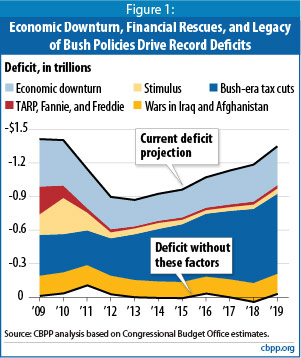
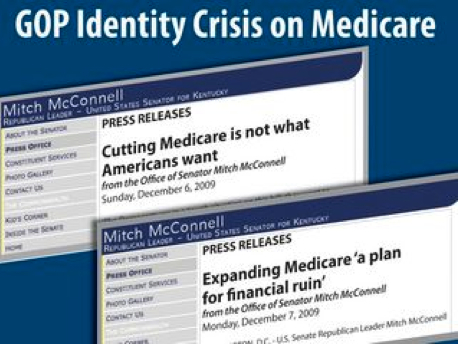
“So, let’s recap. The medium-term deficit problem was created by Bush tax cuts and by an unfunded Bush-era expansion of Medicare. The long-term deficit problem is all about Medicare. Yet the only solution that Republicans can think of is reducing spending–but not Medicare spending. Of course, this shouldn’t surprise us; Mitch McConnell gave us this, after all:*”
CBPP Deficit Analysis
Mitch McConnell Flip Flop Press Releases

(Via The Baseline Scenario.)

A picture is worth a thousand words.

Rational Markets

Wednesday, July 8th, 2009

Justin Fox | The Daily Show | Comedy Central:

The Daily Show With Jon Stewart Mon – Thurs 11p / 10c
Justin Fox
thedailyshow.com
Daily Show
Full Episodes
Political Humor Economic Crisis

(Via The Daily Show.)

Why regulation, but not regulators, is necessary.

Reading the Employment Report: Focus on Hours, Not Heads – Freakonomics Blog – NYTimes.com

Sunday, July 5th, 2009

Reading the Employment Report: Focus on Hours, Not Heads – Freakonomics Blog – NYTimes.com:

“Any evidence of ‘green shoots’ appearing in recent months disappears in this broader measure. The recession continues apace. If current trends continue, we are in for a frightening time.”

(Via Freakonomics Blog.)

Wall Street and the Third World | vanityfair.com

Sunday, June 21st, 2009

Wall Street and the Third World | vanityfair.com:

“The former Communist countries generally turned, after the dismal failure of their postwar system, to market capitalism, replacing Karl Marx with Milton Friedman as their god. The new religion has not served them well. Many countries may conclude not simply that unfettered capitalism, American-style, has failed but that the very concept of a market economy has failed, and is indeed unworkable under any circumstances. Old-style Communism won’t be back, but a variety of forms of excessive market intervention will return. And these will fail. The poor suffered under market fundamentalism—we had trickle-up economics, not trickle-down economics. But the poor will suffer again under these new regimes, which will not deliver growth. Without growth there cannot be sustainable poverty reduction. There has been no successful economy that has not relied heavily on markets. Poverty feeds disaffection. The inevitable downturns, hard to manage in any case, but especially so by governments brought to power on the basis of rage against American-style capitalism, will lead to more poverty. The con?sequences for global stability and American security are obvious.”

(Via Vanity Fair.)

Great and succinct critique on market fundamentalism (“free markets can solve any problem”).

Krugman vs. Ferguson: Letting the Data Speak – Freakonomics Blog – NYTimes.com

Tuesday, June 16th, 2009

Krugman vs. Ferguson: Letting the Data Speak – Freakonomics Blog – NYTimes.com:

“In fact, the recent increase in Treasury yields is almost entirely due to a reduction in the probability of the deflationary (low nominal interest rates) scenario. Score this round for Krugman.
While Ferguson wrongly diagnosed the cause of the rise in interest rates, he is right that the markets are spooked about the risk of an inflationary breakout. There’s about a 7 percent chance that 25-year interest rates will exceed 10 percent, although surprisingly, this risk was slightly higher back in February. This is a fairly extreme scenario: long-term interest rates have not been above 10 percent since inflation was tamed in the mid-1980’s.”

(Via NY Times.)

Ed Krugman – Stay the Course

Tuesday, June 16th, 2009

Op-Ed Columnist – Stay the Course – NYTimes.com:

“The debate over economic policy has taken a predictable yet ominous turn: the crisis seems to be easing, and a chorus of critics is already demanding that the Federal Reserve and the Obama administration abandon their rescue efforts. For those who know their history, it’s déjà vu all over again — literally.”

(Via NY Times.)

Does anyone pay attention to history?

Most Americans Don’t Blame Obama for Economy

Tuesday, March 31st, 2009

Most Americans Don’t Blame Obama for Economy, Poll Finds – washingtonpost.com:

“The number of Americans who believe that the nation is headed in the right direction has roughly tripled since Barack Obama’s election, and the public overwhelmingly blames the excesses of the financial industry, rather than the new president, for turmoil in the economy, according to a new Washington Post-ABC News poll.”

Poll Results

(Via The Washington Post.)

It looks like the public is still in a realistic mood. Still, Obama’s plan needs to start having some effects soon or the public will turn on him.

Built It and They Came

Tuesday, February 17th, 2009

Netbooks killing off sickly Windows PC sales — RoughlyDrafted Magazine:

“That has hit Microsoft particularly hard, resulting in an 11% drop in profits over its year ago quarter and plans to cut 5,000 jobs over the next year and a half. On the other hand, Apple posted its best quarterly results ever, with 9% growth in its Mac sales over the previous year.”

(Via RoughlyDrafted Magazine.)

This what happens when you have to focus on making great products in order to survive.

Throwing in Their 2¢

Monday, February 9th, 2009

Obama Campaigns Outside Washington to Win Insiders on Stimulus – Yahoo! News:

“While the president’s approval ratings are close to 70 percent, much of the public has been persuaded by arguments from congressional Republicans that the stimulus package is loaded with projects that won’t spur economic growth, according to Charles Jones, professor emeritus of political science at the University of Wisconsin in Madison.”

(Via Yahoo! News.)

Why I have not no respect for the GOP. Party comes before country. Fully 2% of this package is what they’ve been harping about. That’s 2¢ out of every dollar. The rest everyone agrees will stimulate the economy. Typical.

Krugman Goes Medieval

Friday, February 6th, 2009

A Dark Age of macroeconomics (wonkish) – Paul Krugman Blog – NYTimes.com:

“There’s no ambiguity in either case: both Fama and Cochrane are asserting that desired savings are automatically converted into investment spending, and that any government borrowing must come at the expense of investment — period.
What’s so mind-boggling about this is that it commits one of the most basic fallacies in economics — interpreting an accounting identity as a behavioral relationship…
S + T = I + G
After a change in desired savings or investment something happens to make the accounting identity hold. And if interest rates are fixed, what happens is that GDP changes to make S and I equal.
That’s actually the point of one of the ways multiplier analysis is often presented to freshmen.”

(Via NY Times Blogs.)

Ouch. Fama and Cochrane made a freshman mistake. That’s why political ideology is soft-think.